
Customers now benchmark every automotive experience against the best they have ever had, regardless of industry. OEMs that treat feedback as a reporting exercise will lose the loyalty race.
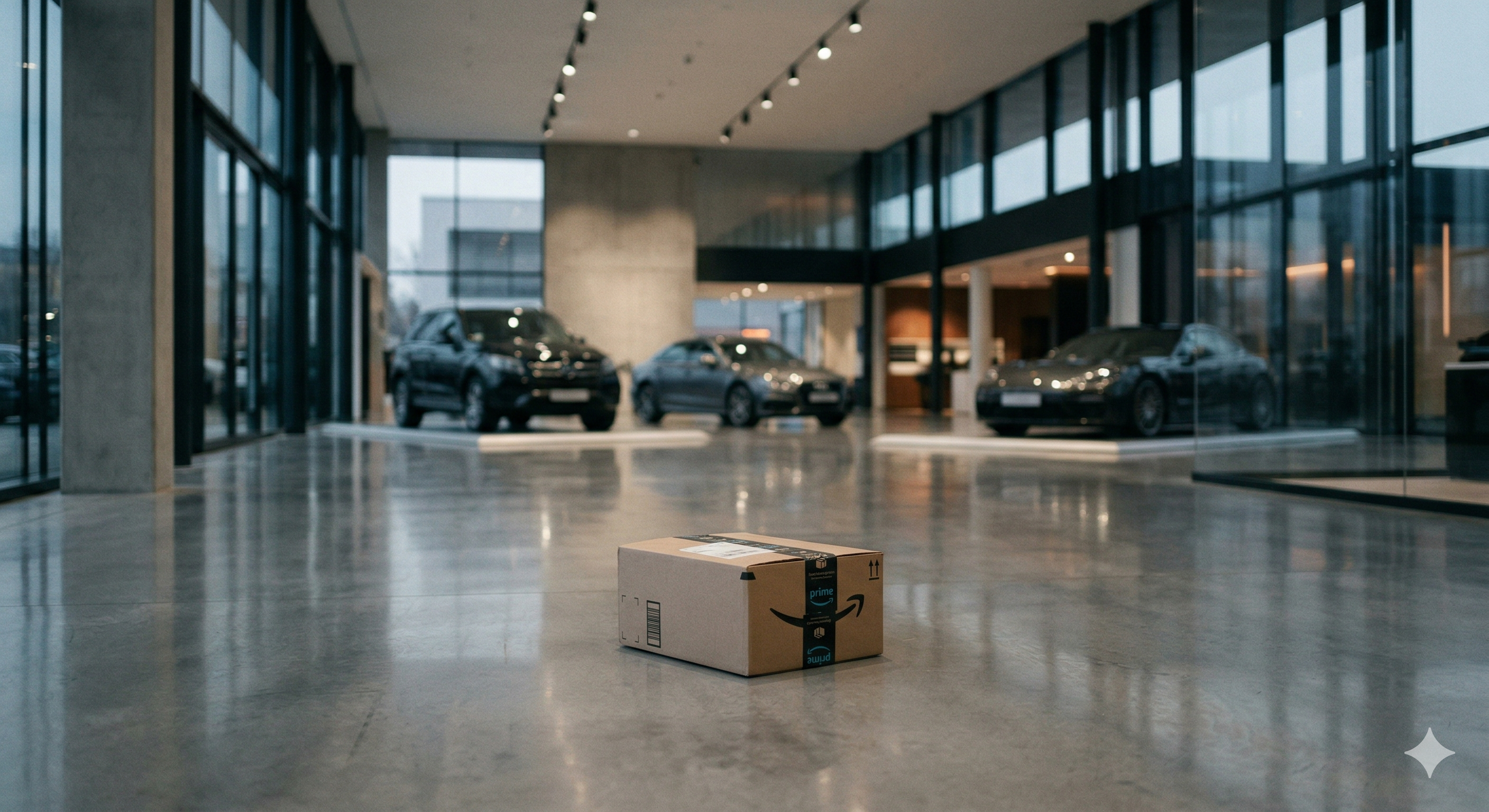
There is a growing disconnect in automotive that most OEMs have not caught up with yet. When a customer has a frustrating experience with your brand, whether that is a clunky service booking, a slow response to a complaint, or an ownership journey that feels disjointed, they are not comparing you to the dealership down the road. They are comparing you to the last time they ordered something from Amazon and had it show up the next morning with zero friction.
That shift in expectation is not theoretical. Shep Hyken's 2026 State of Customer Service and CX report found that customers now judge every brand against the best experience they have ever had, regardless of industry. It does not matter that buying and owning a car is a fundamentally different process to ordering a product online. The emotional benchmark is the same. Customers want to feel like their time is respected, that communication is clear, and that the companies they spend money with actually know who they are.
For OEMs, this is a problem. Because while other industries have spent the last decade stripping friction out of the customer journey, automotive is still largely operating on processes built around the brand's convenience, not the customer's.
The Expectation Gap Is Widening
The same report found that 65% of consumers now prioritise convenience over friendliness. That is a significant finding for an industry that has historically leaned on interpersonal relationships at the dealer level as the foundation of its customer experience strategy.
It is not that friendliness does not matter. It does. But if the underlying process is slow, complicated, or requires the customer to chase updates, a warm smile at the service desk is not going to save the relationship. Customers want things to be easy first. Everything else comes second.
This tracks with what we are seeing in the data more broadly. Customers are not necessarily asking for a premium experience. They are asking for a predictable one. They want to know what is happening with their vehicle, when it will be ready, and what it will cost, without having to make three phone calls to find out.
Amazon did not win on product. It won on reliability. You knew what you were getting, when you were getting it, and what to do if something went wrong. That is the standard now, and it applies to every interaction a customer has with your brand.
Why This Matters More in Automotive
The challenge for OEMs is that the automotive customer journey is long, fragmented, and involves multiple parties. A customer's experience is shaped by the brand, the dealer, the service centre, the finance provider, and increasingly, the digital ecosystem around the vehicle itself.
That complexity is not an excuse. It is the reason getting this right matters so much.
When a customer feels let down at any point in that chain, the brand takes the hit. Not the dealer. Not the service advisor. The brand. And with Hyken's report showing that 82% of customers will leave a brand after a rude or poor interaction, the margin for error is slim. What is worth noting is that most of these failures are not caused by individual employees having a bad day. They are caused by broken processes, poor handoffs between teams, and feedback that never reaches the people who could actually fix the problem.
The Feedback Problem
This is where the real gap sits. Most OEMs collect customer feedback. The issue is what happens to it after collection.
Survey data gets aggregated into dashboards. NPS scores get reported quarterly. But the insight rarely flows back into operational decisions fast enough to change anything. The customer who flagged a painful service experience three months ago has already made up their mind about the brand by the time the data reaches someone who could act on it.
Meanwhile, the richest source of customer sentiment often sits in unstructured data: dealer comments, online reviews, contact centre transcripts, even connected vehicle behaviour patterns. Most of it goes unanalysed because the tools and processes to handle it at scale simply are not in place.
The brands that will close the expectation gap are the ones building feedback into their operating rhythm, not treating it as a reporting exercise. That means shorter loops between insight and action. It means giving regional and dealer-level teams access to the data that is relevant to them. And it means treating customer intelligence as a business function, not a support function.
The Benchmark Has Changed
The automotive industry does not get to set its own standard anymore. Customers have already decided what good looks like, and they learned it from companies that have nothing to do with cars.
The OEMs that recognise this and restructure how they listen, interpret, and act on customer feedback will be the ones that hold onto loyalty over the next decade. The ones that do not will keep wondering why their NPS scores look fine but their repurchase rates tell a different story.