
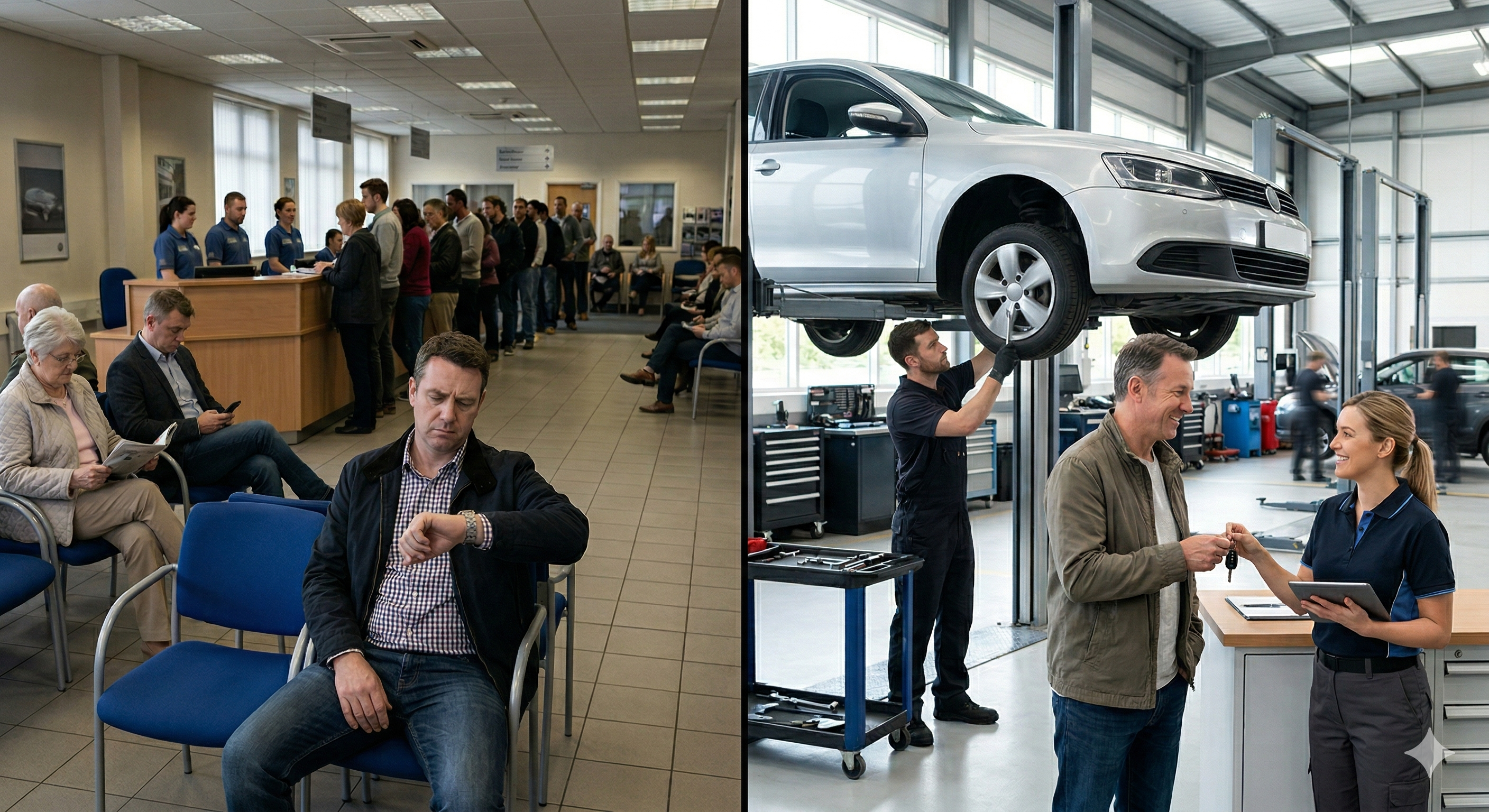
Overall dealer service satisfaction improved by 3 points this year, with premium brands up 8 points. Progress, right? Look closer and a more uncomfortable picture emerges.
There is a quiet threat sitting in the J.D. Power 2026 U.S. Customer Service Index. On the surface, the results look encouraging. Overall dealer service satisfaction improved by 3 points this year, with premium brands up 8 points. Progress, right? Look closer and a more uncomfortable picture emerges.
Mass market customers are waiting an average of 1 hour and 37 minutes for basic maintenance at a dealership. An oil change. A tyre rotation. Work that an aftermarket provider typically turns around in a fraction of the time. Customers are noticing, and they are starting to vote with their feet.
For dealerships, this is a service operations problem. For OEMs, it is a brand problem.
The Dealer Service Satisfaction Gap Is Wider Than It Looks
Aftermarket providers have spent years building their entire proposition around speed and convenience. They have stripped out the friction, streamlined the workflow and trained staff to move quickly. They are not distracted by new vehicle sales targets or manufacturer compliance requirements. Their only job is to get the car in and out, and to make the customer feel like their time was respected.
Dealerships are carrying a lot more weight. They are managing a showroom, handling new and used vehicle sales, processing warranty claims and trying to deliver a premium experience all under the same roof. But that complexity is not the customer's concern. When someone books a routine service, they are comparing their experience against every other service provider they have ever used, not just other dealerships.
That comparison is where the problem lives. And right now, the J.D. Power data suggests the gap is wide enough to drive customers away permanently.
Why the Automotive Dealer Service Experience Is an OEM Problem Too
It is tempting for manufacturers to treat dealer service satisfaction as someone else's responsibility. Dealers are independent businesses, after all. But the customer does not draw that distinction. When they have a poor experience at a franchised dealership, the frustration lands on the brand badge above the door.
Loyalty is built or broken in the service lane. J.D. Power found that when overall satisfaction reaches 950 or above, 86% of mass market customers say they will definitely return to the dealer for paid service. Drop below that threshold and OEM customer retention falls sharply. Retention means repeat purchase. Repeat purchase is an OEM revenue story, not just a dealer one.
OEMs that treat the service experience as outside their remit are leaving one of their most powerful loyalty levers untouched.
How OEMs Can Improve Dealer Service Satisfaction
Closing the gap with aftermarket providers does not require dealerships to become fast-fit centres. It requires a sharper understanding of where time is actually being lost and what customers are feeling at each stage of the visit.
The starting point is listening. Not the annual survey that lands months after a service visit, but timely, structured automotive customer feedback that captures what actually happened and when. Was the wait time the issue? Was it the communication during the visit? Was it the lack of a clear handover at collection? These are different problems with different fixes, and without granular feedback data, dealers and OEMs are guessing.
The OEMs who are getting ahead of this are not just tracking satisfaction scores. They are using customer feedback intelligence to identify patterns across their dealer networks, spotting which sites are consistently underperforming, which parts of the journey are driving dissatisfaction and where targeted intervention will have the most impact on retention.
This kind of visibility changes the conversation between OEM and dealer. Instead of sharing a national average and hoping for improvement, manufacturers can have specific, evidence-based conversations that lead to meaningful change.
The Aftermarket Will Not Wait
The competitive pressure is only going to increase. Aftermarket providers are investing heavily in digital booking, mobile services and subscription maintenance packages. They are not standing still while dealerships catch up.
OEMs have something aftermarket providers will never have: a direct relationship with the customer from the point of purchase. The vehicle, the data it generates and the ownership journey all sit within the manufacturer's ecosystem. That relationship is a significant advantage, but only if it is actively managed and continuously improved based on what customers are actually experiencing.
The J.D. Power findings are a useful prompt for reflection. But they are also a call to action. The dealerships that close the speed and convenience gap will retain more customers. The OEMs that equip their networks to do that, with the right data and insight, will build the kind of loyalty that shows up in repurchase rates for years to come.
At MotiCX, we help automotive OEMs and their dealer networks turn customer feedback into clear, actionable intelligence. If your team is ready to take a closer look at what is really happening in your service lanes, we would like to talk.