
J.D. Power's 2026 CSI data shows only 26% of customers experience the top service KPIs. Here's what that execution gap means for dealer networks and OEMs.
Satisfaction scores are rising. According to J.D. Power's 2026 U.S. Customer Service Index Study, overall dealer service satisfaction reached 868 out of 1,000 this year, up three points from 2025. Premium brands jumped eight points to 886. On the surface, things are improving.
But look closer, and a different picture emerges.
J.D. Power has identified the ten KPIs that most reliably drive customer satisfaction in dealer service. Things like being met at the vehicle on arrival, having work completed correctly the first time, and keeping customers informed throughout the visit. These aren't industry secrets. They've been published, discussed, and trained against for years.
So why do only 26% of customers say they experienced nine or ten of them during their last service visit?
That's not a knowledge problem. Dealers know what the formula looks like. What's missing is consistent execution.
The Scoring Gap Nobody Talks About Enough
The data makes the cost of inconsistency very clear. When a customer experiences all ten top KPIs, average satisfaction reaches 979 out of 1,000. When only three are met, it collapses to 632. That's a 347-point swing driven entirely by whether a service team shows up consistently, not whether they're capable.
Even partial execution carries a significant cost. Customers who experienced seven or eight of the top KPIs scored 63 points lower than those who hit all ten. Getting most things right is still, in the customer's experience, a long way short of getting everything right.
This is the real challenge for dealer networks. It isn't that front-line staff don't understand what good service looks like. It's that good service isn't being standardised reliably across every visit, every advisor, and every location.
One KPI That Tells the Whole Story
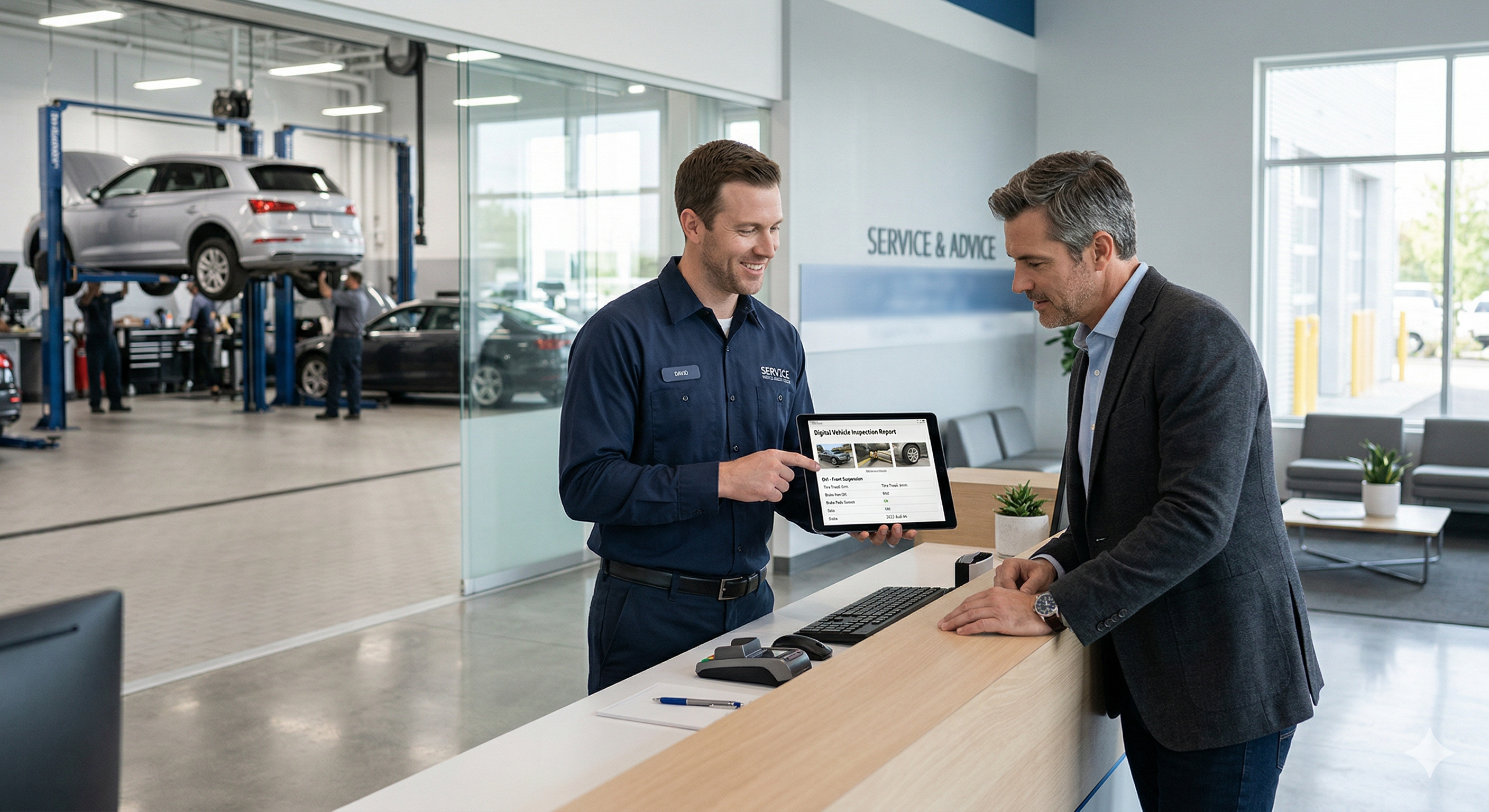
Take photo and video updates as a specific example. Nearly two thirds of customers say they would like to receive photo or video evidence alongside their multi-point inspection results. Dealers that provide it early in the service process see some of the highest satisfaction scores in the study, reaching 928 for premium and 907 for mass market when updates are sent while the vehicle is being worked on.
Yet only 26% of mass market customers actually receive this, with the figure rising to 44% among premium customers.
This is not a case of customers asking for something operationally complex. The capability exists at most dealerships. The gap is in whether it happens consistently, or whether it's left entirely to the discretion of individual advisors on a given day.
Multiply that inconsistency across every touchpoint in the top ten, and it becomes easy to see how scores fall short even when the intent is genuinely there.
The Competitive Context Is Getting Harder
Dealers are competing for service business from more directions than they were five years ago. Aftermarket providers have built their model around speed and convenience, with 62% of comparable maintenance visits completing in under an hour compared to an average of 1.61 hours at mass market dealers and 2.46 hours at premium brands.
Direct-to-consumer brands add a different kind of pressure. When customers who previously owned a Tesla or Rivian visit a traditional dealer for service, their satisfaction drops to 855, noticeably below both the premium and mass market averages. These customers aren't impossible to serve. They're arriving with a higher baseline expectation, shaped by a different kind of ownership experience. Closing that gap doesn't require reinventing the service model. In many cases, it means delivering the ten KPIs more reliably.
Returning a vehicle cleaner than it arrived. Completing a thorough digital inspection. Proactively updating the customer on status. These are not expensive changes. They're operational habits, and the data suggests they're still far from universal.
Where the Real Work Sits
Reading the J.D. Power data is one thing. Acting on it is another.
Knowing your satisfaction scores at a brand level tells you where you rank. Understanding where execution breaks down at the visit level, which KPIs are being missed most consistently, by which advisors, at which locations, is what allows you to do something about it.
OEMs and dealer groups that can close that loop systematically are in a very different position to those responding to headline scores once a year. The gap between knowing the formula and executing it every time is, ultimately, a feedback and accountability problem. Brands that treat it as one will be the ones that move the needle.
The 2026 CSI numbers are a useful starting point. The question is what happens next.