
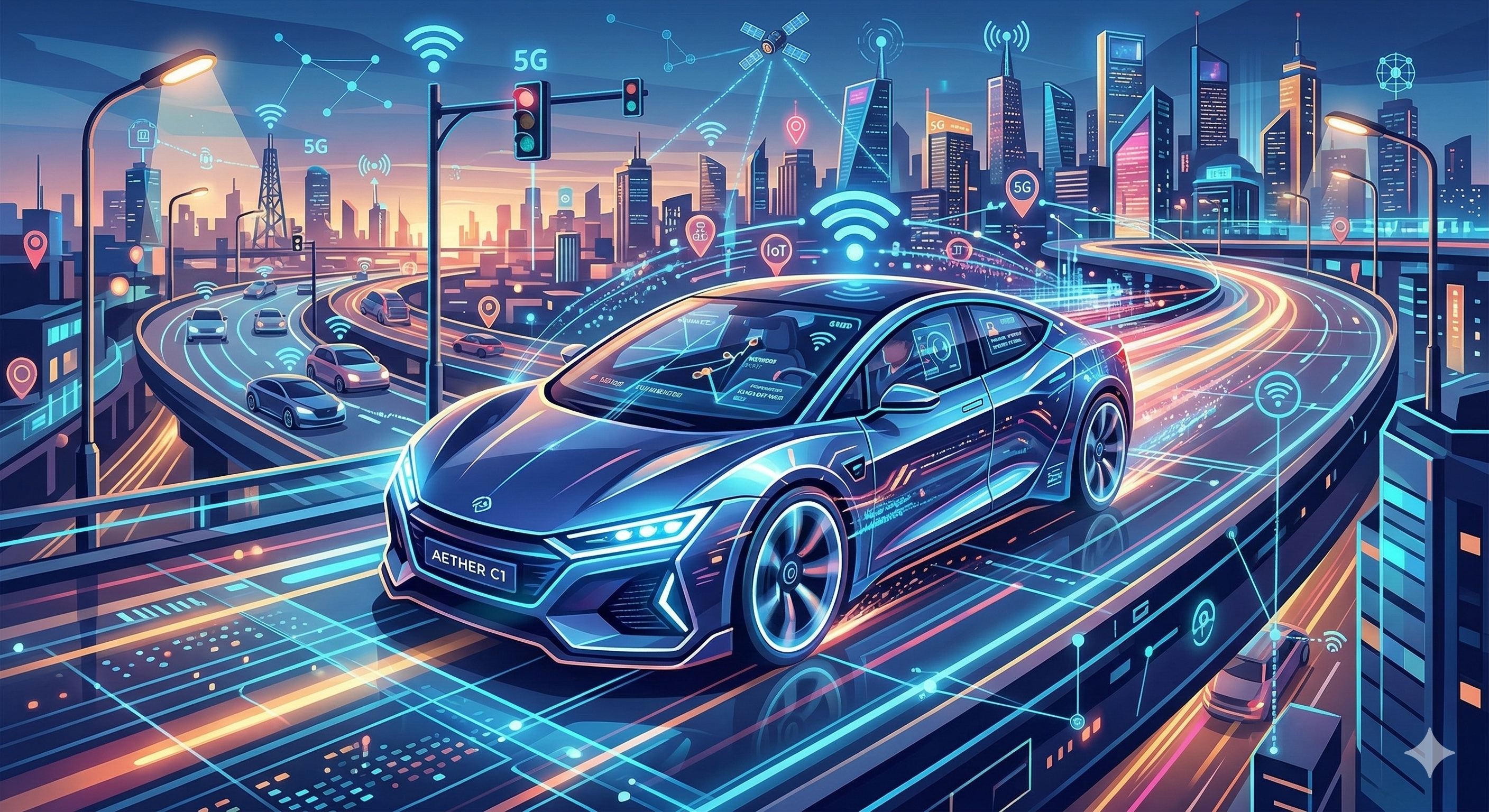
For a century, the automotive business model was straightforward: build a great car, sell it, and hope to see the customer again in a few years. The relationship was transactional, and the data was sparse. That era is over.
For a century, the automotive business model was straightforward: build a great car, sell it, and hope to see the customer again in a few years. The relationship was transactional, and the data was sparse. That era is over. Today, the vehicle is transforming from a piece of hardware into a sophisticated, data-generating software platform.
This transformation represents one of the biggest commercial opportunities in the industry's history. According to a report by McKinsey & Company, the market for monetizing connected car data could reach between $250 billion and $400 billion by 2030.
The key to unlocking this value lies in a new paradigm: connected vehicles create continuous feedback revenue loops. This real-time data stream opens a perpetual dialogue between the OEM, the vehicle, and the customer, driving profits across the entire lifecycle.
Beyond the Sale: The Three Pillars of Connected Revenue
The traditional "fire-and-forget" model is being replaced by a dynamic, data-driven ecosystem built on three core pillars:
1. Proactive Service & Aftersales: Connected vehicle data is the engine of the modern post-purchase experience. By analyzing real-time telematics, OEMs can predict maintenance needs before a component fails, automatically prompting the owner to schedule a service visit. This proactive approach not only creates a high-margin service opportunity but also significantly boosts customer satisfaction and reduces costly warranty claims.
2. Real-World Product Development: For decades, automotive R&D relied on controlled tests and limited survey data. Now, engineers can access a torrent of aggregated, real-world insights. By understanding which features customers actually use, how different components perform under real-world stress, and what driving patterns are most common, OEMs can build better, more reliable, and more desirable vehicles in the next product cycle.
3. New Revenue Streams & Hyper-Personalization: This is where direct data monetization comes into play. The opportunities are vast and growing, including:
Usage-Based Insurance (UBI): Offering lower premiums to safer drivers based on their actual driving behavior.
In-Car Commerce: Enabling drivers to order coffee, pay for fuel, or reserve parking directly from their infotainment system.
Feature Subscriptions: Offering premium features, like advanced driver-assistance systems or enhanced performance modes, on a subscription basis, creating recurring revenue long after the initial sale.
The Trust Equation: Navigating Privacy and the Value Exchange
Tapping into this data stream is not without its challenges, and the most critical is trust. Customers are increasingly aware of their data privacy, and a single misstep can cause irreparable brand damage.
Success hinges on a transparent "value exchange." Research from firms like Capgemini consistently shows that a majority of consumers are willing to share their data, but only if they receive clear and tangible benefits in return, such as cost savings, convenience, or enhanced safety.
Building this trust requires:
Absolute Transparency: Clearly communicating what data is being collected and how it will be used.
Customer Control: Giving users easy-to-understand controls to manage their data-sharing preferences.
Robust Security: Investing heavily in cybersecurity to protect this sensitive information.
Ultimately, the future of automotive profitability isn't just about the technology in the car; it's about building a new, data-driven relationship with the customer. The OEMs that master this value exchange and use connected insights to deliver continuous improvement will be the ones that lead the industry for the next century.