
Projections from firms like McKinsey & Company suggest that software-based revenue in the automotive sector could become a multi-hundred-billion-dollar market by 2030
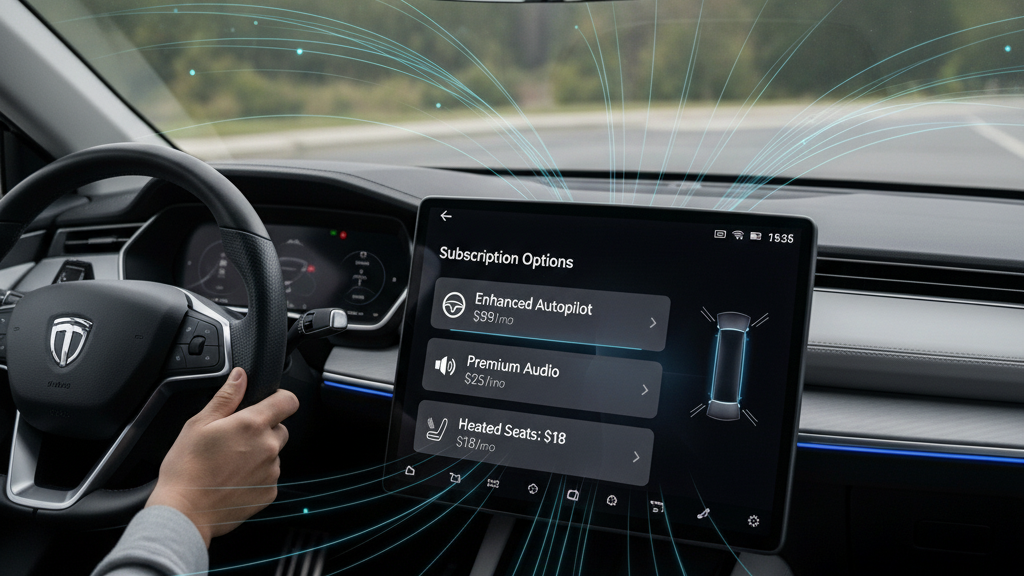
Heated seats for $18 a month? The automotive industry's early experiments with subscriptions have been met with both excitement and a healthy dose of customer backlash. These initial bumps in the road, however, don't change the destination: a fundamental shift from one-time hardware sales to a future of software-defined, recurring revenue.
The prize is enormous. Projections from firms like McKinsey & Company suggest that software-based revenue in the automotive sector could become a multi-hundred-billion-dollar market by 2030. The difference between capturing a piece of that prize and facing a PR disaster lies in a single concept: a continuous feedback loop that ensures a fair and evolving value exchange.
The 'Value Exchange' Crisis: What Went Wrong?
The most high-profile struggles, such as BMW’s attempt to charge a monthly fee for heated seats, or VW recently adding a subscription fee to reach the top speed of their latest ID.3, offer a critical lesson. As widely reported by outlets like Bloomberg, the backlash wasn't about the price, but the principle. Customers felt they were being asked to pay again for hardware that was already installed in their vehicle. This violated the perceived value exchange.
A successful subscription must provide ongoing, evolving value, a service, not just a paywall. The key message is that subscription success requires continuous feedback optimization to ensure this value is consistently delivered and understood.
The Feedback-Driven Subscription Model
To avoid the pitfalls of the past, OEMs must use customer feedback as the foundation of their subscription strategy, influencing everything from feature development to pricing.
1. Developing Features Customers Will Actually Pay For Instead of guessing, OEMs can use feedback from surveys, in-car usage data, and online reviews to understand which services customers truly value. Research from JD Power's Tech Experience Index (TXI) Study consistently shows which new features delight customers and which ones they find frustrating. This data allows OEMs to prioritize development of subscriptions that solve real problems, such as:
Advanced driver-assistance
features for long road trips.
Premium infotainment
bundles with integrated streaming services.
2. Optimizing the Entire Service Experience The subscription isn't just the feature, it's the entire digital experience. A clunky sign-up process, confusing billing, or a buggy app can kill an otherwise great service. Continuous feedback on the user interface (UI) and user experience (UX) of the connected services app is critical for reducing churn and maintaining satisfaction.
3. Creating Dynamic, Value-Based Pricing Feedback allows for smarter pricing. By analyzing which customer segments value which features, OEMs can create tailored subscription bundles, moving away from a one-size-fits-all approach. For example, a "Cold Weather Package" bundling heated seats, steering wheel, and remote start may be highly valued in one market but irrelevant in another.
The Playbook for Subscription Success
Building a profitable recurring revenue stream requires a new mindset. Drawing on principles from subscription economy leaders like Zuora, a successful automotive strategy should include:
Start with Net-New Value:
Focus on services that provide evolving capabilities (e.g., real-time traffic prediction, enhanced AI assistants) rather than simply unlocking existing hardware.
Build a Centralized Feedback System:
You cannot manage this at scale without a unified platform to capture and analyze feedback from every channel, from the in-car system to the app store.
Iterate Relentlessly:
The launch of a subscription is just the beginning. The service must be constantly updated with new features and improvements based directly on customer feedback and usage data.
The shift to recurring revenue is one of the most significant transformations in automotive history. Success will not be determined by who can lock down the most features, but by who can build the most responsive, value-driven relationship with their customers, powered by a continuous feedback loop.